 Save
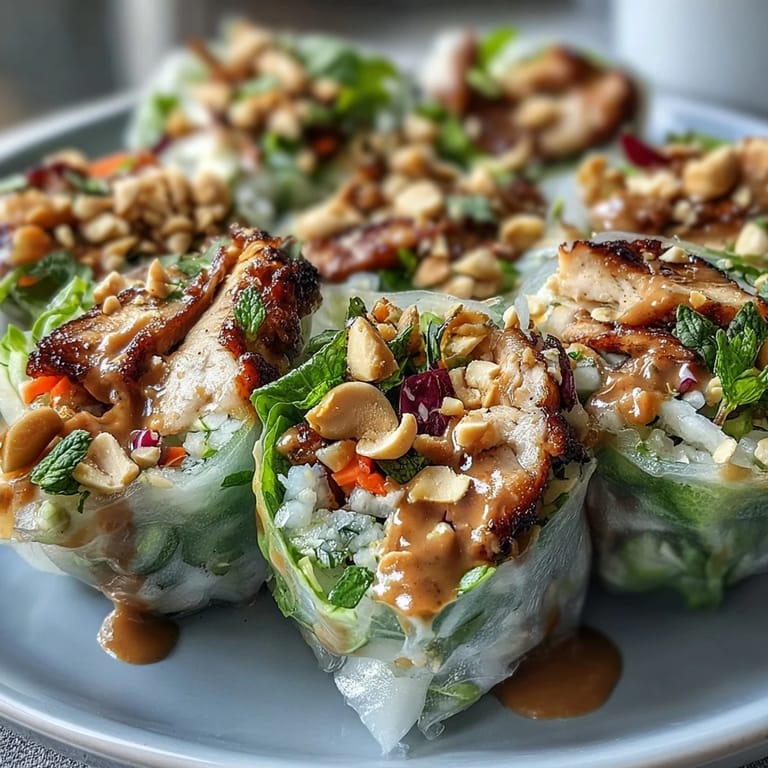
Save My roommate came home one afternoon with a takeout container of Vietnamese spring rolls, and instead of eating them whole, she deconstructed everything into a bowl, drizzled it with peanut sauce, and suddenly I understood why this approach might actually be better. There's something wonderfully honest about a rice paper roll bowl, where every crisp vegetable and silky noodle strand gets its own moment instead of being wrapped up and hidden. I started making them at home after that, and they've become my go-to when I want something that feels fancy but comes together in under thirty minutes.
Last summer I made these bowls for a potluck where half the guests were vegetarian and the other half weren't, and instead of scrambling to create two versions, I just set out three protein options and let everyone build their own. Watching people layer their vegetables and drizzle sauce made me realize this format takes the pressure off the cook and puts the joy back into assembly, which somehow made the whole meal feel more relaxed and fun.
Ingredients
- Rice Paper: These delicate sheets transform completely when hydrated, becoming silky and pliable, but I learned the hard way that oversaturating them makes them tear, so a quick five to ten second dunk is really all you need.
- Jasmine Rice or Vermicelli Noodles: The rice soaks up the peanut sauce beautifully, while noodles add a lighter feel if you're going for something less filling.
- Protein (Chicken, Tofu, or Shrimp): Whatever you choose, make sure it's properly seasoned on its own since it doesn't sit in a sauce like traditional rolls do.
- Carrots: Julienne them thin so they stay crisp and provide that satisfying crunch against the softer elements.
- Cucumber: Deseeding prevents the bowl from getting watery as it sits, a detail that changed everything for me when I started making these ahead.
- Red Bell Pepper: The sweetness balances the savory sauce, and the bright color makes each bowl feel intentional and vibrant.
- Red Cabbage: Its natural crunch and slight peppery bite ground the bowl in something earthy.
- Mixed Salad Greens: These act as a bed that keeps everything separate and prevents the bowl from feeling heavy.
- Fresh Mint and Cilantro: Don't skip these herbs, they're what makes the whole thing sing with freshness and lift the flavors that might otherwise feel one-note.
- Peanut Butter: Creamy works best here because it whisks into a smooth sauce without lumps, and whole grain can sometimes make it grainy.
- Soy Sauce: Use tamari if you're cooking gluten-free, and honestly the slight saltiness of soy sauce is irreplaceable in this sauce.
- Hoisin Sauce: This adds a subtle sweetness and depth that makes the sauce feel rounded instead of just spicy and tangy.
- Rice Vinegar: The acidity brightens everything, cutting through the richness of the peanut butter.
- Lime Juice: Fresh lime is worth the squeeze because bottled versions lack that sharp, clean bite.
- Sriracha: Optional but I always add it because the heat complements the cooling herbs and makes you reach for more.
- Roasted Peanuts: Chopped instead of whole so they distribute throughout the bowl and add texture with every spoonful.
- Fried Shallots: These crispy bits are optional but they're the little luxury that makes the bowl feel restaurant quality.
Tired of Takeout? 🥡
Get 10 meals you can make faster than delivery arrives. Seriously.
One email. No spam. Unsubscribe anytime.
Instructions
- Soften Your Rice Paper:
- Fill a shallow dish with warm water and dip each sheet for just five to ten seconds until it's pliable but still slightly firm, then lay it flat on a clean towel to prevent tearing. Stack two or three softened sheets and cut them into rough shards or squares, which will crisp up beautifully once assembled.
- Cook Your Protein:
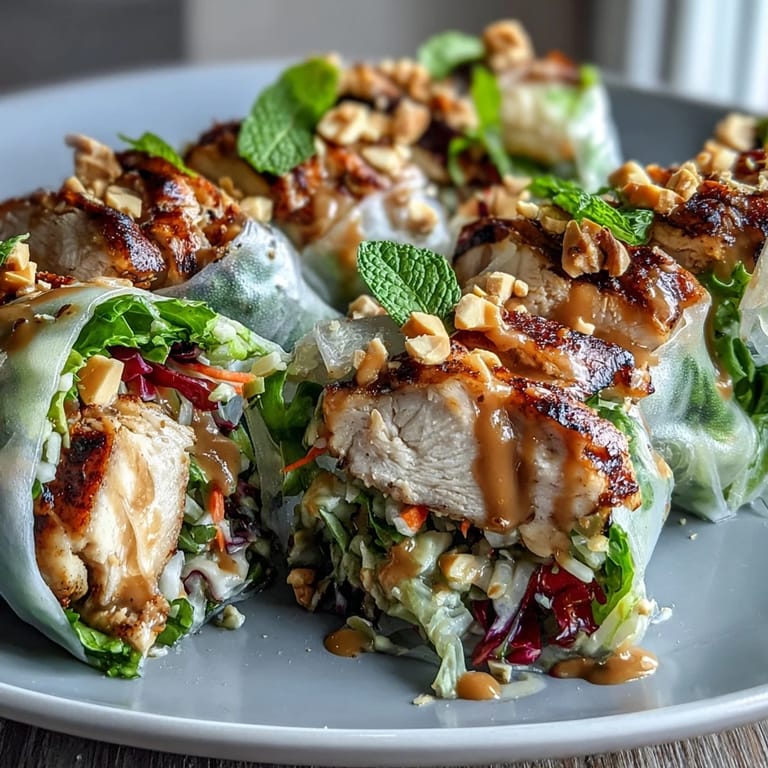
- Grill the chicken until it has a light char and juices run clear, pan-fry the tofu until it's golden and slightly crispy on the edges, or poach the shrimp until it's just pink and cooked through. Season generously because this is your main element and it needs to stand on its own without being wrapped up.
- Prep All Your Vegetables:
- Wash, peel, and slice everything as thinly and uniformly as you can because consistency makes the bowl feel intentional rather than rushed. The thin cuts also mean everything cooks together as a cohesive bite instead of requiring separate chewing.
- Whisk Together Your Sauce:
- Combine the peanut butter, soy sauce, hoisin, rice vinegar, lime juice, and sriracha in a bowl, then whisk until it's mostly smooth before gradually adding warm water until you reach a pourable consistency. Taste it as you go because lime juice intensity varies, and you want it bright but balanced.
- Assemble Your Bowls:
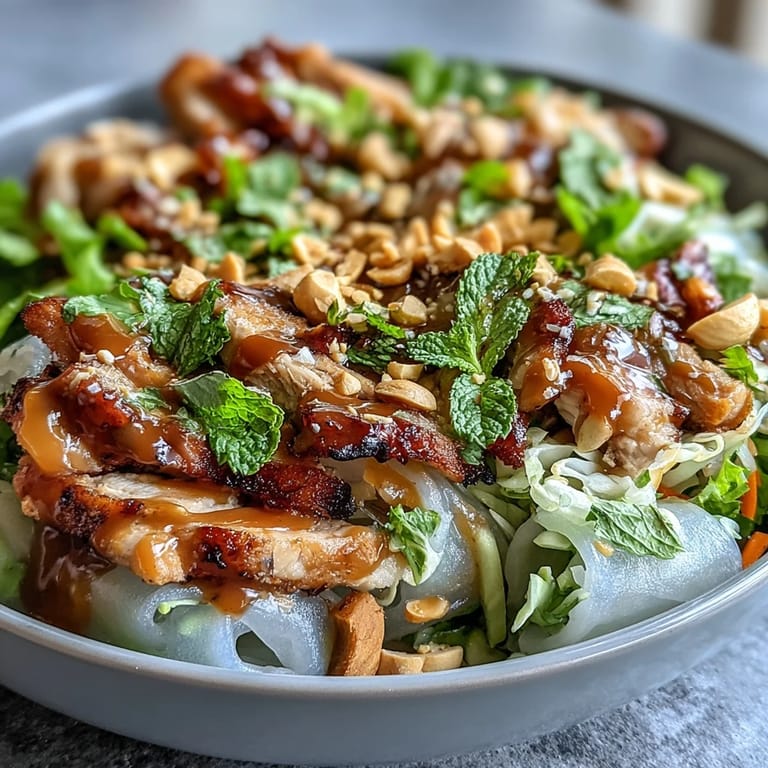
- Start with a bed of rice or noodles, then layer on the rice paper shards, then arrange the vegetables, greens, herbs, and protein so everything is visible and accessible. This way when you drizzle the sauce, it reaches all the elements and you get a little bit of everything in each spoonful.
- Finish and Serve:
- Drizzle generously with peanut sauce, sprinkle with chopped peanuts and fried shallots if using, and set lime wedges on the side so everyone can adjust the brightness to their taste. Serve immediately while the rice paper still has a slight crisp and everything is at its best.
 Save
Save There was a Tuesday when I made these for myself after a long day, and sitting down with a bowl where I could taste each component separately felt like giving myself permission to slow down. The act of choosing which vegetable to grab next, adjusting the sauce as I went, turned eating into something meditative instead of just refueling.
Why This Deconstructed Approach Works
Wrapping everything into a spring roll is beautiful, but it also hides what you're eating, and sometimes you want to taste your vegetables independently instead of everything blending together. This bowl format respects each ingredient while still bringing them together through the sauce, which feels more honest and actually lets you taste what you're making. Plus, there's no fighting with rice paper that tears or feeling like you're eating too much wrapper to filling.
Customizing for Your Guests
The magic of this bowl is that everyone can build their own version, which means you're not cooking three separate meals or making someone feel like an afterthought. Set out your proteins on the side, let people choose their level of spice with the sriracha, and suddenly dietary differences feel like options instead of complications. I've done this with vegans, gluten-free eaters, and people who just don't like cilantro, and every time it's felt inclusive rather than exhausting.
Make-Ahead and Storage Tips
You can prep all your vegetables the night before and store them in separate containers, cook your protein ahead, and make the sauce earlier in the day as long as you cover it and keep it cool. The only thing you really need to do right before eating is soften and cut the rice paper, which takes maybe five minutes and makes the whole assembly feel fresh. Rice paper does soften over time, so if you're making these ahead for a party, soften and cut them just before people arrive, then layer them into bowls as people are ready to eat.
- Keep your sauce in a squeeze bottle for easy drizzling and more controlled portion sizes.
- Toast your peanuts yourself if you have the time because homemade roasted peanuts taste noticeably better than store-bought.
- If you're cooking for a crowd, set up an assembly line so people can customize without you standing there playing short-order cook.
 Save
Save This bowl has become my answer to the question of what to make when I want something that tastes bright and complex but doesn't require a lot of fussy technique. Every time I make it, I remember why deconstructing things sometimes reveals more than putting them together ever could.
Recipe Questions & Answers
- → How do I cut rice paper for bowls?
Submerge rice paper sheets in warm water for 5-10 seconds until softened. Stack 2-3 sheets together and cut into strips or squares using kitchen shears or a sharp knife. The pieces absorb flavors while maintaining a pleasant chewy texture.
- → Can I make this bowl ahead of time?
Prepare all vegetables and protein in advance, storing them separately in the refrigerator. Cut the rice paper fresh before serving to prevent it from becoming too soft or sticky. The peanut sauce can be made up to 5 days ahead and stored in an airtight container.
- → What protein works best in this bowl?
Grilled chicken breast adds savory substance, while firm tofu provides a plant-based protein that absorbs the peanut sauce beautifully. Cooked shrimp offers a light, sweet flavor that complements the fresh vegetables. Each protein pairs well with the Vietnamese-inspired flavors.
- → How can I adjust the peanut sauce consistency?
Start with the base ingredients and gradually add warm water, one tablespoon at a time, until the sauce reaches your desired thickness. For a thicker dipping consistency, use less water. For a drizzling consistency, add more water until the sauce flows smoothly from a spoon.
- → What vegetables can I substitute?
Feel free to use any crisp vegetables you enjoy. Sliced radishes, shredded purple cabbage, bean sprouts, or thinly sliced green onions all work beautifully. Pickled vegetables like carrots or daikon add authentic Vietnamese flavor and extra tanginess to each bite.
- → Is this bowl gluten-free?
The bowl is naturally gluten-free when you use tamari instead of regular soy sauce and check that your hoisin sauce is certified gluten-free. Rice paper and all vegetables are naturally gluten-free, making this an excellent option for those avoiding gluten.