 Save
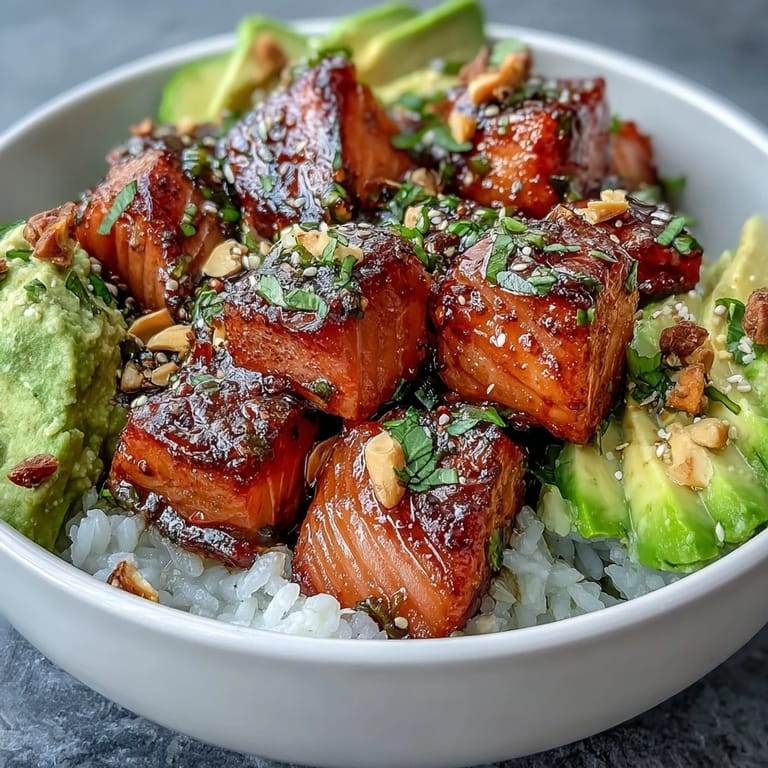
Save Last summer, I was staring at a half-empty fridge on a Tuesday evening when my roommate mentioned craving something bright and filling. I spotted a beautiful salmon fillet, some avocado that had arrived at peak ripeness, and a jar of chili oil, and suddenly the whole bowl came together in my head. That first bite—the creamy avocado hitting the warm salty rice, followed by the punch of wasabi—felt like discovering something I'd been missing for years. Now it's my go-to when I want to feel like I've made something restaurant-quality without the stress.
I made this for my partner after they'd had a rough day, and watching their whole face relax with that first forkful reminded me how food can quietly shift someone's mood. The warmth of the rice, the coolness of the avocado, the little sparks of heat from the chili oil and wasabi—it felt like a conversation without words. They've asked for it at least twice a month ever since.
Ingredients
- Fresh salmon fillet, 250 g, skinless and cubed: Look for fish that smells clean and oceanic, never fishy—that's your first sign of freshness. Cutting it into bite-sized pieces means every spoonful delivers protein without requiring a steak knife at the bowl.
- Tamari sauce, 2 tbsp: I switched from regular soy sauce years ago because tamari feels less harsh and more rounded in flavor. It's also naturally gluten-free if that matters to you.
- Toasted sesame oil, 1 tsp: A tiny amount goes a long way here—it's deeply aromatic and should smell nutty and warm when you open the bottle.
- Rice vinegar, 1 tsp (plus 1 tbsp for the rice): This is gentler than white vinegar and carries a subtle sweetness that balances the saltiness without being obvious about it.
- Honey or agave syrup, 1 tsp: Just enough to round out the marinade and prevent it from tasting one-dimensional and sharp.
- Cooked sushi rice, 200 g: If you're starting from scratch, use about 100 g uncooked short-grain rice and cook it with slightly more water than you normally would—sushi rice needs to be tender and just a touch sticky.
- Sugar, 1/2 tsp: This seasons the rice gently and works with the vinegar to give it that characteristic sushi rice brightness.
- Large ripe avocado, 1: Ripe means it yields slightly to gentle pressure but isn't mushy or brown inside—slice it just before assembly so it stays vibrant and creamy.
- Roasted peanuts, 2 tbsp, roughly chopped: The crunch here is essential, and roasting them yourself (or buying them pre-roasted) makes them taste more alive than raw.
- Chili oil, 1 tbsp: Adjust this fearlessly based on your heat tolerance—some people love a cautious drizzle, others want a generous coating.
- Wasabi paste, 1 tsp: A little dab does tremendous work, so start small and add more if you want the heat to build as you eat.
- Nori sheets, cut into strips: These add a subtle ocean flavor and visual sophistication, though they're completely optional if you don't have them on hand.
- Cucumber, 1 small, thinly sliced: The coolness and crispness of cucumber grounds the whole bowl and gives your palate a quiet moment between bites of richer elements.
- Spring onions, 2, sliced: They bring a gentle onion bite that doesn't overpower, and their bright green color makes the bowl look alive.
- Toasted sesame seeds, 1 tbsp: Toast them yourself if possible—the difference between toasted and raw is the difference between a whisper and a flavor that actually shows up.
- Fresh cilantro or microgreens, for garnish: Optional but worthwhile if you have them, adding herbaceous freshness at the very end.
- Lime wedges, for serving: A squeeze of lime brings everything into focus and prevents the bowl from feeling heavy.
Tired of Takeout? 🥡
Get 10 meals you can make faster than delivery arrives. Seriously.
One email. No spam. Unsubscribe anytime.
Instructions
- Prepare the marinade and marinate the salmon:
- Whisk together tamari, sesame oil, rice vinegar, and honey in a medium bowl until the honey dissolves into the liquid and everything looks glossy and combined. Add your salmon cubes, toss them gently so every piece gets coated, cover, and slide into the refrigerator for 10 to 15 minutes—this isn't a long marinade, but it's enough to let the fish absorb the flavors and soften slightly.
- Season the rice:
- Mix your cooked sushi rice with rice vinegar, sugar, and a small pinch of salt while the rice is still warm (the heat helps the seasonings distribute evenly). The rice should taste balanced—slightly tangy, not too sweet, not too salty—and it should still feel light and separate.
- Prep all your toppings:
- Slice your avocado lengthwise, remove the pit, then carefully slice the flesh into neat pieces. Chop your peanuts, cut your nori into strips, slice your cucumber into thin rounds, and slice your spring onions, keeping the white and green parts separate if you want to be fancy about it.
- Build the bowls:
- Divide the seasoned rice evenly between two serving bowls, pressing it gently so it holds together but doesn't feel compacted. Arrange the marinated salmon across the top, then layer in your avocado slices, cucumber, and spring onions in whatever pattern appeals to you—there's no right way here.
- Add the final flourishes:
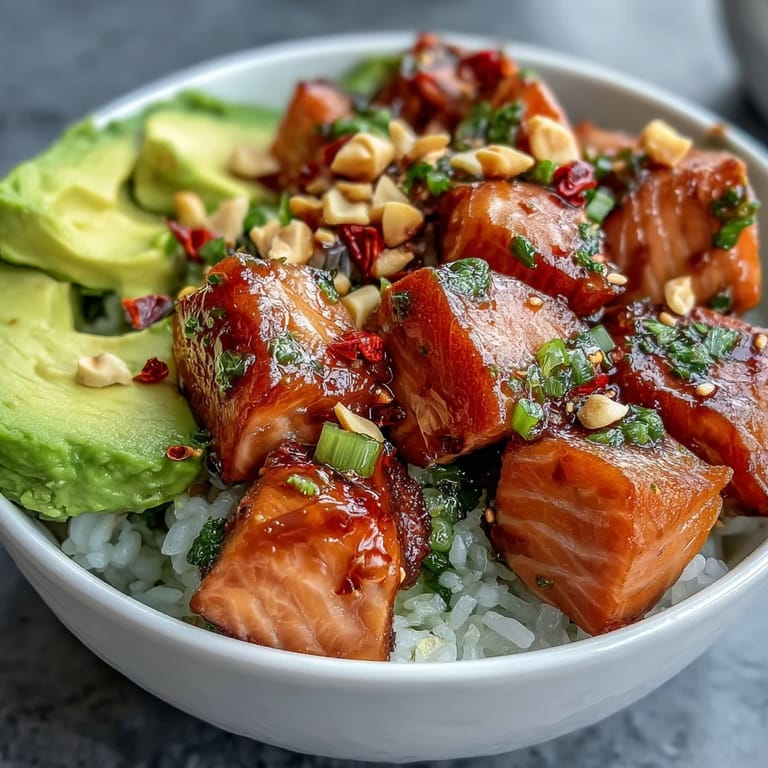
- Drizzle chili oil across the top, place small dots of wasabi paste where you'll notice them but they won't overpower an unsuspecting bite, then scatter roasted peanuts and sesame seeds generously. Add nori strips, cilantro if using, and serve with lime wedges on the side so people can adjust the brightness to their liking.
 Save
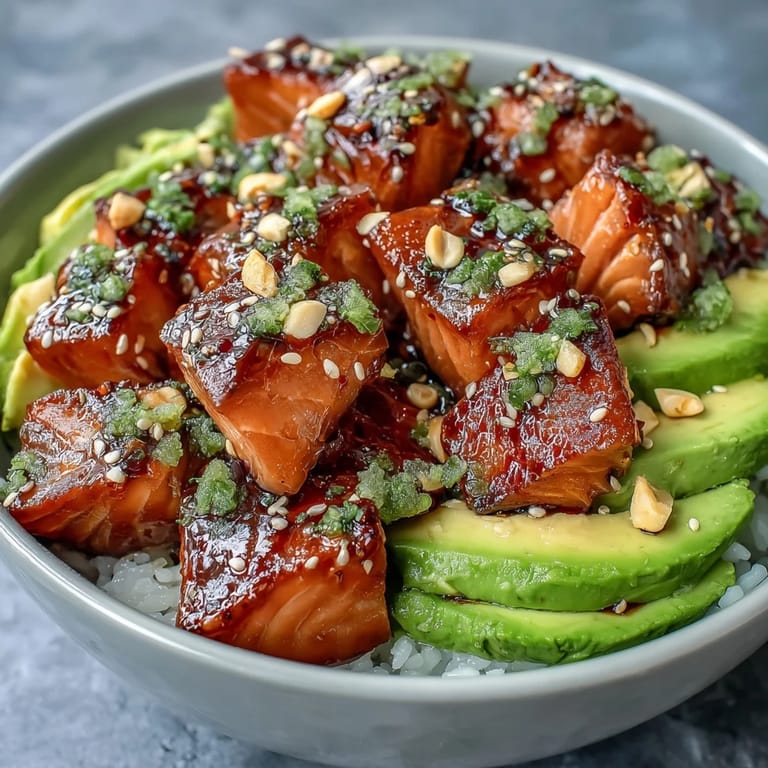
Save There was a moment last month when I was making this for a friend visiting from out of town, and they watched me assemble the bowl with this quiet contentment, asking questions about why I arranged things a certain way and where I'd discovered this combination. What started as just another dinner turned into a conversation about flavors and textures, about how sometimes the simplest meals carry the most intention. That's when I realized this bowl isn't just food—it's an invitation to slow down and notice.
Finding Your Heat Balance
Wasabi and chili oil are the backbone of the spice here, but they're not bullies—they work best when you treat them like seasoning rather than the main event. I learned this the hard way by being too generous with wasabi early on and overwhelming my palate for the rest of the meal. Now I dot the wasabi strategically, placing it where a spoon will catch it alongside rice and salmon, so the heat arrives as a pleasant surprise rather than an ambush. The chili oil, on the other hand, can afford to be more generous because it coats everything with warmth rather than sharp intensity.
The Case for Cold Ingredients Meeting Warm Rice
One of the reasons this bowl feels so balanced is the temperature interplay—the warm rice acts as a buffer and flavor amplifier, while the cool avocado and cucumber provide contrast and prevent the whole thing from feeling heavy. This came about partly by accident when I made the bowl on a hot afternoon and realized the coolness was exactly what I needed. Temperature matters more than we usually give it credit for, and here it's doing real work toward making the bowl feel refreshing rather than indulgent.
Making This Bowl Your Own
The beauty of a bowl is its flexibility—you're not locked into any particular component the way you would be with a composed plated dish. I've made this with tofu when I didn't have salmon in the house, swapped in cashews for peanuts when someone had an allergy, and even experimented with pickled ginger and edamame to add extra layers. The core structure holds, and everything else becomes a conversation between what you have and what you're craving.
- Vegetarian version: marinate firm tofu or tempeh in the same mixture and pan-fry until golden edges form, or use chickpeas for protein and earthiness.
- Nut-free option: swap peanuts for pumpkin seeds or sunflower seeds to maintain that crunchy contrast without the allergen concern.
- Extra umami: add a thin layer of miso paste to the rice or scatter some pickled ginger and a soft-boiled egg if you want the bowl to feel more decadent.
 Save
Save This bowl has become my answer to the question of what to cook when I want something that feels special but doesn't require special skills. It's proof that simple ingredients, when treated with attention and intention, can become something people genuinely look forward to.
Recipe Questions & Answers
- → Can I make this bowl ahead of time?
Prepare components separately in advance. Marinate salmon up to 24 hours ahead, store seasoned rice in the refrigerator, and slice toppings just before serving for best texture and freshness.
- → What other fish works well in this bowl?
Tuna, yellowtail, or cooked shrimp make excellent alternatives. For a cooked version, try seared scallops or grilled cod fillets cut into cubes.
- → How do I adjust the spice level?
Start with less chili oil and wasabi, then add gradually to taste. For mild flavor, omit wasabi entirely and use just a drizzle of chili oil as garnish.
- → Can I use brown rice instead of sushi rice?
Brown rice works well and adds extra fiber. Cook it a bit longer until tender, and season with the same vinegar mixture for authentic flavor.
- → What vegetables can I add for more variety?
Shredded carrots, edamame, pickled ginger, radishes, or sautéed mushrooms all complement the flavors beautifully while adding color and nutrients.
- → Is this suitable for meal prep?
Yes! Store rice, salmon, and toppings in separate containers. Reheat rice gently and serve toppings cold or at room temperature for quick lunches throughout the week.