 Save
Save My neighbor Maria taught me that minestrone isn't about following rules—it's about opening your pantry and letting the seasons decide. She'd simmer this soup on rainy Sundays, and the kitchen would smell like home before anyone even tasted it. What struck me most was how she never measured twice, just tossed in whatever vegetables were lingering in her crisper drawer and somehow it always tasted exactly right. I've spent years trying to recreate that casual confidence, and I think I've finally figured out her secret: it's not the recipe, it's the permission to make it your own.
I made this soup the first winter my daughter refused to eat anything green, and somehow the spinach disappeared into the broth so seamlessly that she never noticed. By the third bowl, she was asking if there were more beans because the flavors had all melted together into something she could trust. That bowl taught me that minestrone is really about patience and the quiet magic of letting humble ingredients become something nourishing.
Ingredients
- Olive oil: Start with good quality oil—it's the foundation of the flavor, not just the cooking medium.
- Yellow onion, carrots, and celery: This is your aromatic base, and taking five full minutes to soften them properly builds the soup's backbone.
- Garlic: Minced fresh, never jarred, because you'll smell the difference the moment it hits the hot oil.
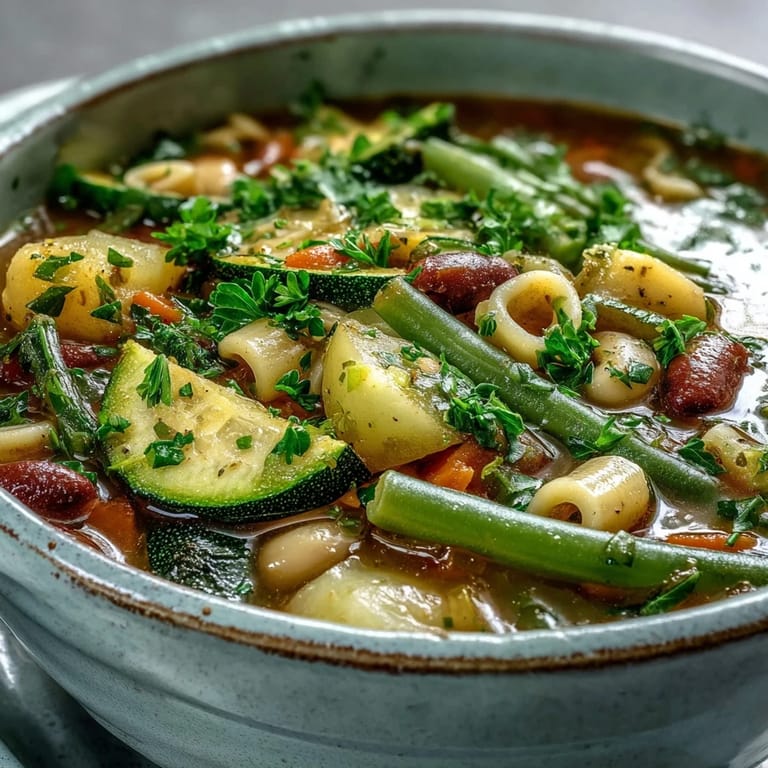
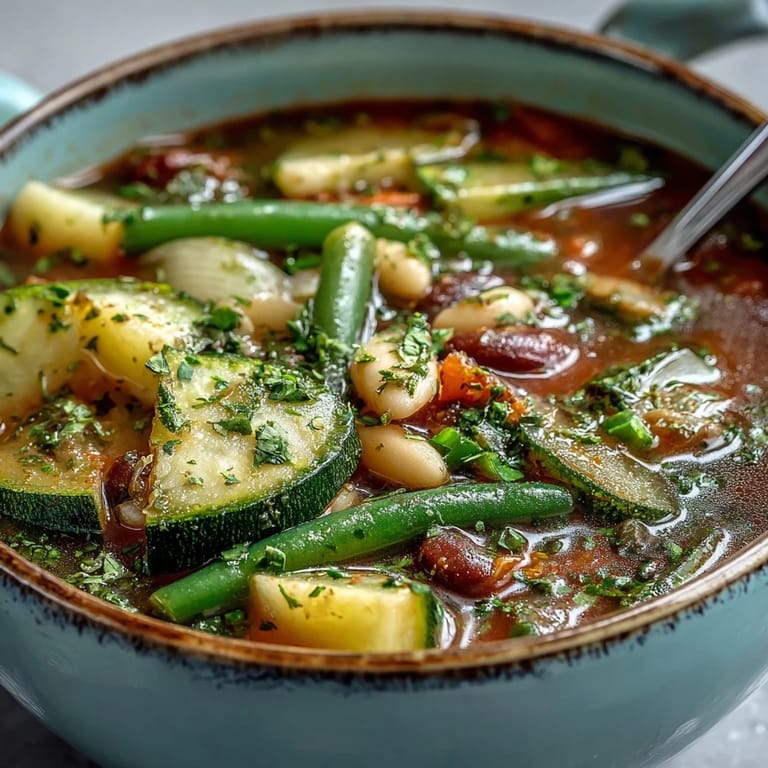
- Zucchini and potato: The potato gives body and creaminess without actual cream, while zucchini adds brightness and texture.
- Green beans: They keep their slight firmness even after simmering, giving you something to bite into.
- Diced tomatoes: Canned is perfectly fine here—they're packed at peak ripeness and add acidity that balances everything.
- Cannellini beans: Rinse them well to remove the starchy liquid, which keeps the broth clear and clean tasting.
- Small pasta: Ditalini or elbow macaroni work best because they don't overwhelm the delicate vegetables.
- Vegetable broth: The quality matters more than you'd think—a thin, weak broth will make the whole soup taste tired.
- Dried Italian herbs and bay leaf: Together they whisper rather than shout, letting the vegetables speak.
- Baby spinach or kale: Added at the very end so it stays tender and doesn't turn into an unpleasant mush.
- Fresh parsley: The final sprinkle that reminds you this is alive and intentional.
- Parmesan cheese: Optional but worth the extra step if you have it on hand.
Tired of Takeout? 🥡
Get 10 meals you can make faster than delivery arrives. Seriously.
One email. No spam. Unsubscribe anytime.
Instructions
- Build your flavor foundation:
- Heat the olive oil in a large pot over medium heat and add the diced onion, carrots, and celery. You're not rushing this—let them soften for the full five minutes, stirring occasionally until the onions turn translucent and the whole pot smells inviting. This isn't wasted time, it's where the soup's depth begins.
- Add the second wave:
- Stir in the minced garlic, diced zucchini, potato, and green beans, cooking for just three more minutes. The garlic will become fragrant almost immediately, which is your signal that everything is warming through properly.
- Bring it all together:
- Pour in the diced tomatoes with their juice, the drained cannellini beans, vegetable broth, dried herbs, and the bay leaf. Stir everything until combined, then increase the heat and let it come to a gentle boil—you'll see the surface shimmer and steam rise.
- Let it simmer:
- Reduce the heat to medium-low, cover the pot, and let it bubble quietly for twenty minutes. The vegetables will soften and the flavors will begin merging into something cohesive and warm.
- Finish with pasta:
- Uncover the pot and stir in your small pasta, then simmer uncovered for eight to ten minutes until the pasta is tender and has absorbed some of the broth. Taste a piece of pasta and a bit of potato to make sure they're both cooked through.
- Wilt the greens:
- Fish out the bay leaf with a spoon, then add the spinach or kale and stir gently for about two minutes until it softens and darkens. The whole pot will smell grassy and fresh, which means you're almost done.
- Season and serve:
- Taste the soup and add salt and pepper gradually, tasting as you go because the broth was already seasoned. Ladle into bowls, scatter fresh parsley on top, and add a small handful of grated Parmesan if you'd like that sharp, salty note to finish.
 Save
Save One evening, my mother-in-law brought over a pot of minestrone and stayed long enough to share it with us. She sat at my kitchen table and told me about making this exact soup in her mother's kitchen in Genoa, how they'd save vegetable scraps throughout the week just for this moment. That soup tasted different knowing the story behind it, like I was eating memory and connection in broth form.
Why This Soup Feels Like Home
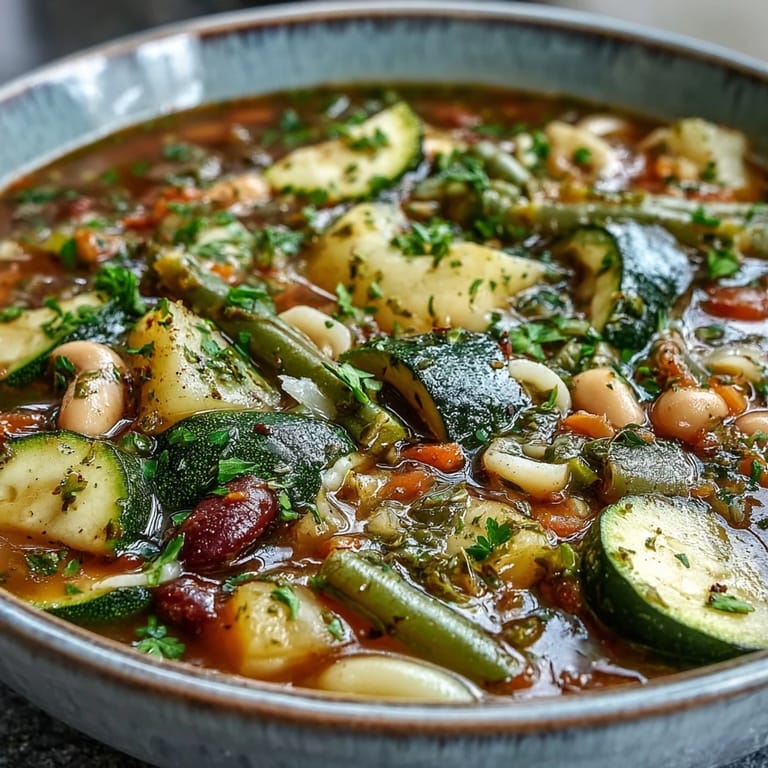
Minestrone works because it's forgiving in a way that makes you feel competent in the kitchen. There's no precise timing that will ruin you, no technique that demands years of practice to master. The vegetables become soft, the beans become creamy, the pasta absorbs the broth, and somehow it all tastes intentional even when you've improvised half of it. That permission to adapt is what makes people return to this recipe again and again.
Seasonal Variations That Work Every Time
The beauty of minestrone is that it shifts with what your market offers. In summer, add diced eggplant or fresh corn kernels near the end so they stay slightly firm. Fall brings butternut squash and kale that can go in earlier since they need more time to soften. Winter is perfect for hearty cabbage and chard, while spring lets you use tender peas and fresh herbs. I've learned that the soup never tastes wrong, just different, and different is how you keep coming back to the same recipe without boredom.
The Small Details That Make the Difference
The first time I added a Parmesan rind while simmering, I understood why my attempts always tasted like a good approximation rather than the real thing. That rind melts slightly and infuses the broth with an umami richness that makes every spoonful taste more intentional. Similarly, finishing with fresh herbs instead of just dried ones wakes up the whole bowl, reminding you that this is alive, not just warming.
- Always taste the soup before serving and adjust the salt—different broths have different sodium levels, so what works one day might be too salty the next.
- If the pasta seems to be absorbing all the liquid too quickly, add a splash more broth because minestrone should be soupy, not stewlike.
- Serve it with crusty bread and a simple green salad, and suddenly a weeknight dinner feels like you planned it intentionally.
 Save
Save This soup has become my answer to almost every question: too tired to cook, make minestrone. Need to use up vegetables before they spoil, make minestrone. Want something that tastes like care without demanding perfection, make minestrone. That's the real gift of this recipe.
Recipe Questions & Answers
- → Can I make this minestrone ahead of time?
Yes, minestrone keeps well in the refrigerator for up to 4 days. Store in an airtight container and reheat gently on the stovetop. Note that pasta may absorb liquid over time, so add extra broth when reheating if needed.
- → What pasta works best for minestrone?
Small pasta shapes like ditalini, elbow macaroni, or small shells work perfectly as they're easy to eat with a spoon. For gluten-free options, use your favorite gluten-free small pasta variety.
- → Can I freeze leftover minestrone?
Minestrone freezes well for up to 3 months. For best results, freeze without the pasta and add freshly cooked pasta when reheating. This prevents the pasta from becoming mushy.
- → How can I make this soup heartier?
Add more beans, include diced pancetta or Italian sausage for non-vegetarian versions, increase the pasta quantity, or serve with crusty bread and a drizzle of quality olive oil on top.
- → What vegetables can I substitute or add?
Minestrone is very flexible. Try adding cabbage, peas, bell peppers, butternut squash, or Swiss chard. Use whatever seasonal vegetables you have available for a fresh twist.
- → How do I keep the vegetables from becoming too soft?
Add vegetables in stages based on cooking time. Hardy vegetables like carrots and potatoes go in first, while quick-cooking greens like spinach are added at the end for just 2 minutes.