 Save
Save There's something almost magical about the smell of tomatoes hitting a hot oven, when the kitchen fills with this concentrated sweetness you never knew was hiding inside them. I discovered this soup by accident one late summer afternoon when I had way too many tomatoes sitting on the counter and absolutely no inspiration. A friend stopped by, saw the pile of produce, and suggested we just roast everything and see what happened. That casual experiment turned into something I've made dozens of times since, each batch somehow tasting like that first surprising moment when it all came together.
I made this for my mom during one of those early autumn days when the temperature finally drops and you realize you've been craving something warm. She took one spoonful and immediately asked for the recipe, then started critiquing how I could make it better next time. That's when I knew it was worth keeping around, because she's the type who doesn't hold back.
Ingredients
- Ripe tomatoes, 1.5 kg (3.3 lbs): Use tomatoes at their peak ripeness or even slightly overripe, since roasting concentrates their sweetness and any less-than-perfect specimens will taste incredible once caramelized.
- Large onion: Quartering it keeps the pieces substantial enough not to disappear into the soup, and the natural sugars caramelize beautifully alongside the tomatoes.
- Garlic cloves, 4: Whole and unpeeled makes them mellow and sweet rather than sharp, adding depth without any bite.
- Olive oil, 2 tbsp: Good quality oil here matters more than you'd expect, since it carries the roasted flavor through the finished soup.
- Salt and freshly ground black pepper: Don't skip the freshly ground pepper; pre-ground loses its personality and the soup needs that little peppery kick.
- Dried or fresh thyme, 1 tsp or 1 tbsp: Fresh thyme if you have it makes everything taste brighter, but dried works reliably when that's what's in your cupboard.
- Vegetable broth, 500 ml (2 cups): This is the base that keeps the soup from becoming too thick, so use something flavorful you'd actually drink on its own.
- Tomato paste, 1 tbsp: A small amount concentrates the tomato flavor even further, giving the soup its characteristic richness.
- Sugar, 1 tsp: Optional but genuinely useful if your tomatoes lean acidic or if you like balancing flavors this way.
- Heavy cream or coconut cream, 60 ml (¼ cup): This softens the acidity and adds velvety texture, though the soup is stunning without it if you prefer something lighter.
- Day-old bread, 4 thick slices: Slightly stale bread holds its structure better when toasting and creates croutons with better texture than fresh bread would give you.
- Olive oil for croutons, 2 tbsp: Keep this separate from the roasting oil so you can control the flavor and ensure even coating.
- Garlic powder, ½ tsp: Subtle seasoning for the croutons that doesn't overwhelm but adds just enough savory depth.
Tired of Takeout? 🥡
Get 10 meals you can make faster than delivery arrives. Seriously.
One email. No spam. Unsubscribe anytime.
Instructions
- Get Your Oven Ready:
- Preheat to 200°C (400°F) and give it enough time to fully heat so the tomatoes start caramelizing immediately when they hit the tray.
- Prepare and Coat the Vegetables:
- Halve your tomatoes, quarter the onion, and leave garlic cloves whole and unpeeled. Toss everything together on a large baking tray with olive oil, salt, pepper, and thyme, making sure each piece gets a light coating. The tomato halves should be cut-side down where possible so they can caramelize against the hot sheet.
- Roast Until Golden:
- Slide the tray into your oven and let it go for 30 to 35 minutes, checking after 25 so you can see the progress. You're looking for the tomatoes to collapse slightly and develop dark, caramelized edges while the onion turns soft and slightly browned at the corners.
- Toast the Croutons Alongside:
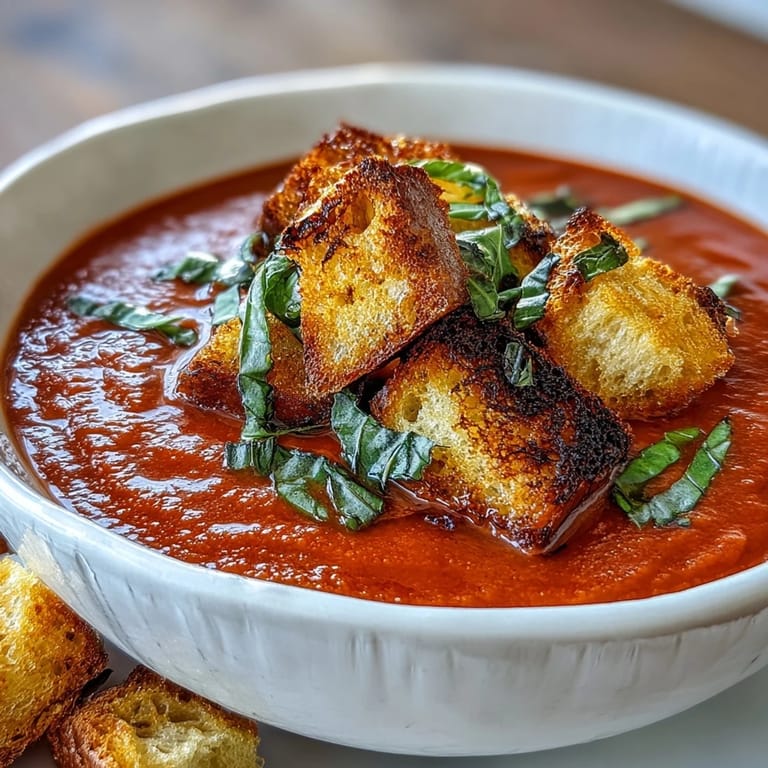
- While the vegetables roast, toss bread cubes with olive oil, garlic powder, salt, and pepper, then spread them on another baking sheet. Slide this into the oven too (they can share the space) and bake for 10 to 15 minutes, stirring once halfway through, until they're golden and crisp enough to crack slightly when you bite one. Set them aside to cool while you finish the soup.
- Build the Soup Base:
- Scrape all your roasted vegetables into a large saucepan, add the vegetable broth, tomato paste, and a teaspoon of sugar if you're using it. Bring everything to a gentle simmer over medium heat and let it bubble softly for about 10 minutes so the flavors meld together.
- Blend Until Silky:
- Use an immersion blender to purée the soup right in the pot, moving it around so you catch all the pieces and get everything to a smooth consistency. If you're using a regular blender instead, work in batches and be careful with the hot liquid, letting a little steam escape before you put the lid on.
- Finish and Serve:
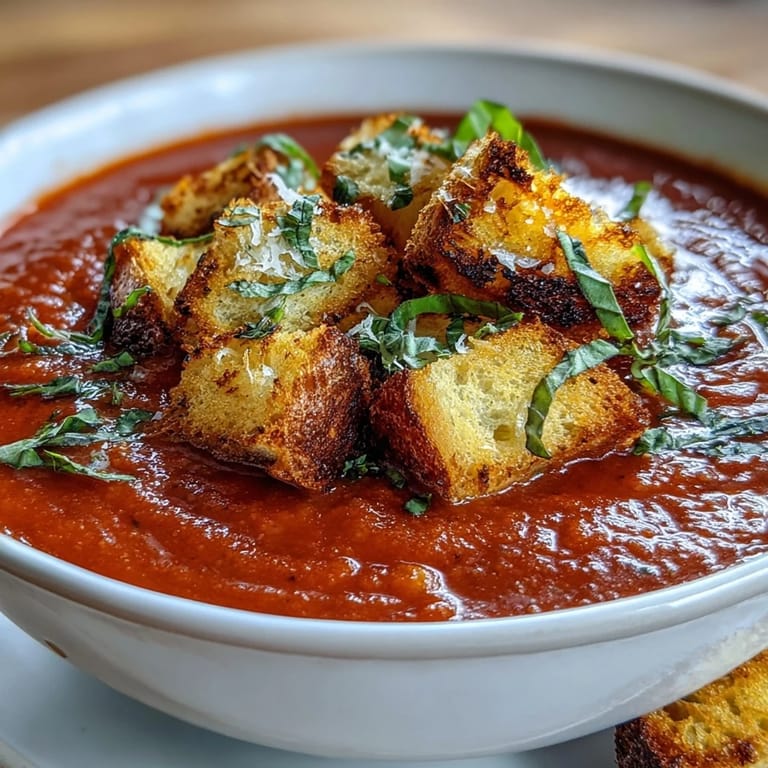
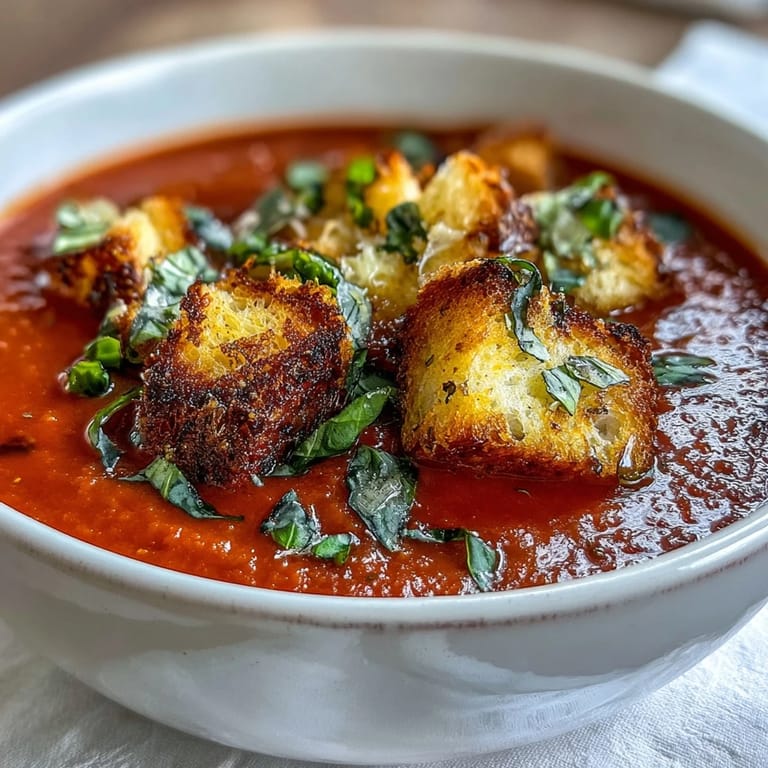
- Stir in the cream if you're using it, taste the soup, and adjust the salt and pepper to your preference. Ladle into bowls and crown each one with a handful of those crispy croutons, serving right away so they stay crunchy.
 Save
Save This soup showed up at my kitchen table during a difficult week when I needed something that felt both comforting and like I'd actually accomplished something in the kitchen. The act of roasting vegetables and making croutons from scratch felt grounding in a way that mattered, and then feeding it to myself and the people around me felt like a small rebellion against not having the energy to care.
The Secret of Slow Roasting
The entire character of this soup comes down to time in the oven, not from complicated techniques. When tomatoes roast low and slow, their water evaporates and their natural sugars concentrate into something almost candy-like, which means the finished soup tastes like distilled tomato goodness rather than watered-down vegetable broth. I learned this the hard way by rushing the roasting time once and ending up with something that tasted thin and forgettable, so now I'm religious about giving it the full 30 to 35 minutes.
Why Homemade Croutons Change Everything
Store-bought croutons are convenient but somehow always taste slightly stale or overseasoned in a way that's hard to describe until you've had homemade ones next to them. Making your own takes maybe five extra minutes and transforms the soup from good to the kind of thing people remember and ask you to make again. The satisfaction of biting into bread you toasted yourself, knowing exactly what went into it, elevates the whole experience.
Customization and Small Tweaks That Matter
This is genuinely one of those recipes where you can play with it and make it your own without anything going wrong. A pinch of smoked paprika adds a subtle depth that makes people wonder what they're tasting, while fresh basil stirred in at the very end brings brightness that balances the richness. I've also learned that a tiny splash of balsamic vinegar added during the simmer step rounds out the flavors in a way that feels sophisticated without being obvious.
- Don't add cream until you've tasted the soup, since you might find you prefer it without—the roasted tomato flavor is plenty rich on its own.
- Fresh herbs like basil, parsley, or chives scattered on top just before serving add color and a fresh pop that makes the presentation feel intentional.
- This soup freezes beautifully for up to three months if you skip the cream and add it fresh when you reheat, keeping it tasting just-made.
 Save
Save This soup feels like the kind of thing you make when you want comfort without pretension, when you want to feed people something that tastes like you put real thought into it even though the actual work is mostly just waiting for an oven timer. Every time I make it, I'm grateful for that random afternoon that turned into a recipe I actually use.
Recipe Questions & Answers
- → What makes roasted tomato soup different from regular tomato soup?
Roasting the tomatoes concentrates their natural sugars and deepens their flavor significantly. The high heat caramelizes the vegetables, creating sweet undertones and complex notes you simply cannot achieve through stovetop cooking alone.
- → Can I make this soup ahead of time?
Absolutely. This soup actually tastes better the next day as flavors continue to meld. Store in an airtight container in the refrigerator for up to four days. Add the croutons just before serving to maintain their crisp texture.
- → What type of tomatoes work best?
Roma tomatoes are ideal because they're meaty with fewer seeds and less water content, but any ripe tomatoes will produce excellent results. Even slightly overripe tomatoes work wonderfully since roasting transforms their texture completely.
- → How do I get the smoothest texture?
An immersion blender creates perfectly smooth results while keeping cleanup minimal. If using a countertop blender, work in batches and be careful with hot liquids—remove the center cap and cover with a kitchen towel to allow steam to escape safely.
- → Can I freeze this soup?
Yes, freeze without the cream for up to three months. Thaw overnight in the refrigerator, reheat gently, and stir in the cream just before serving. The croutons are best made fresh, though they can be stored in an airtight container for several days.
- → What can I serve alongside this soup?
A simple green salad with vinaigrette balances the richness beautifully. Grilled cheese sandwiches make this an instant classic combination. For lighter fare, crusty bread for dipping or a protein like roasted chicken rounds out the meal nicely.