 Save
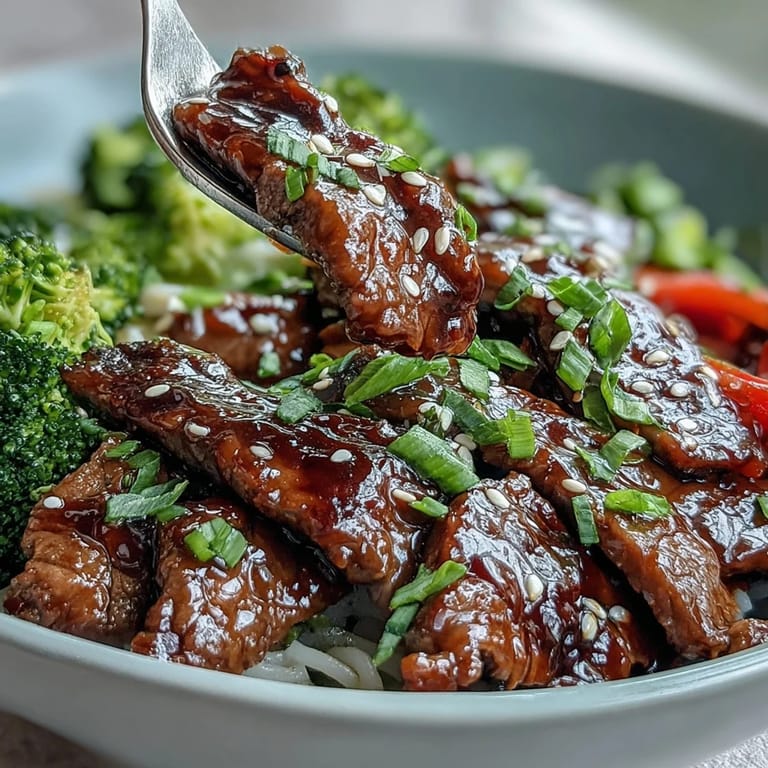
Save My neighbor knocked on my door holding a takeout container, insisting I try the noodles from a new spot downtown. One bite of those slippery rice noodles tangled with caramelized beef changed my weeknight routine forever. I scribbled notes on a napkin, determined to crack the balance of salty, sweet, and that hint of toasted sesame. After a few messy wok experiments and one smoke alarm incident, I landed on this version that somehow tastes even better than that first container.
I made this for my brother's birthday dinner because he'd been living on frozen meals during exam season. Watching him twirl noodles around his fork and reach for seconds without looking up from his plate told me everything I needed to know. He asked for the recipe before he left, which is the highest compliment in our family.
Ingredients
- Rice noodles: These slippery strands soak up sauce beautifully and cook in minutes, just don't let them sit too long or they'll clump into a stubborn mass.
- Flank steak: Slicing against the grain is the secret to tender beef, look for the lines running through the meat and cut perpendicular to them.
- Broccoli florets: They add a satisfying crunch and soak up the garlic-ginger aromatics as they stir-fry.
- Bell pepper: Red or yellow peppers bring sweetness and bright color, plus they hold their shape better than green ones.
- Carrot: Julienned carrots cook quickly and add a gentle sweetness that balances the salty sauce.
- Green onions: A fresh, sharp garnish that wakes up every bite right before serving.
- Garlic and ginger: These aromatics bloom in hot oil and create the fragrant base that makes your kitchen smell like a night market.
- Soy sauce: The salty backbone of the sauce, use low-sodium if you're sensitive to salt or want more control.
- Brown sugar: It melts into the soy sauce and caramelizes slightly on the beef, adding depth without making things syrupy.
- Sesame oil: A few drops go a long way, this toasted oil adds a nutty finish that ties everything together.
- Vegetable oil: A neutral oil with a high smoke point for stir-frying without burning.
- Sesame seeds: They add a delicate crunch and toasted flavor that makes the dish feel complete.
Tired of Takeout? 🥡
Get 10 meals you can make faster than delivery arrives. Seriously.
One email. No spam. Unsubscribe anytime.
Instructions
- Prep the noodles:
- Cook the rice noodles according to package directions, then drain and rinse them under cold water to stop the cooking. Toss them with a tiny drizzle of oil so they don't stick together while you work.
- Sear the beef:
- Heat vegetable oil in a large skillet or wok over medium-high heat until it shimmers, then add the thinly sliced flank steak in a single layer. Let it sear for 2 to 3 minutes without stirring so it gets a nice brown crust, then remove and set aside.
- Bloom the aromatics:
- In the same skillet, add the minced garlic and grated ginger, stirring constantly for about 30 seconds until your kitchen smells incredible. Don't let them burn or they'll turn bitter.
- Stir-fry the vegetables:
- Toss in the broccoli, bell pepper, and julienned carrot, stirring frequently for about 5 minutes. You want them tender but still crisp, with a little char on the edges.
- Mix the sauce:
- While the vegetables cook, whisk together the soy sauce, brown sugar, and sesame oil in a small bowl until the sugar dissolves completely. Taste it and adjust if you like things sweeter or saltier.
- Combine everything:
- Return the beef to the skillet and pour the sauce over everything, stirring to coat. Add the cooked rice noodles and gently toss with tongs until every strand is glossy and heated through, about 2 minutes.
- Garnish and serve:
- Scatter chopped green onions and sesame seeds over the top, then serve immediately while the noodles are still silky. The contrast of cool green onions against hot noodles is perfect.
 Save
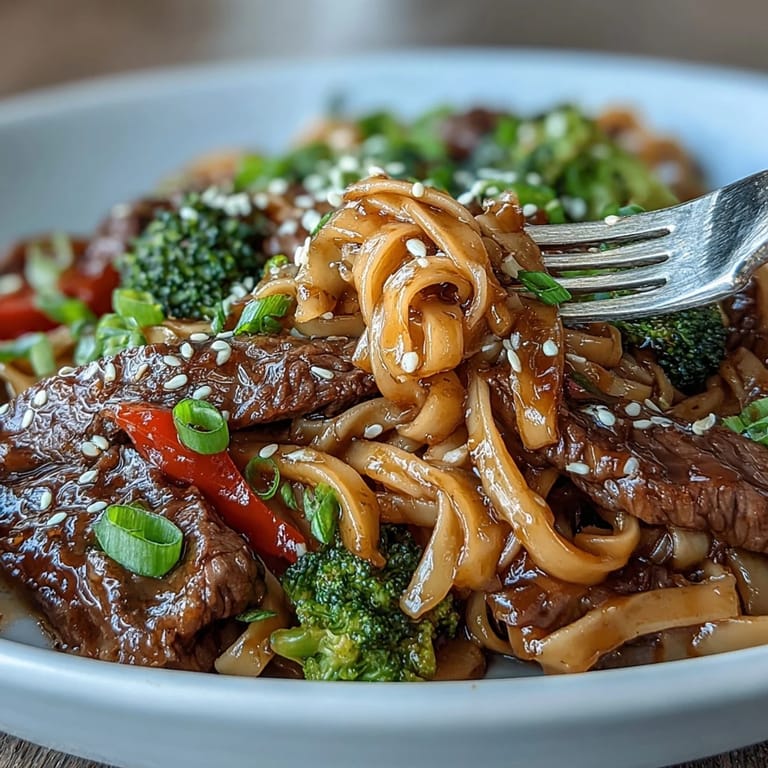
Save One rainy evening, I doubled this recipe for a group of friends who showed up drenched and grumpy. By the time we sat down with steaming bowls, the kitchen windows were fogged and everyone was laughing about something silly. That's when I realized this dish has a way of turning ordinary nights into the kind you remember.
How to Slice Flank Steak Properly
Flank steak has long muscle fibers running in one direction, and if you slice with the grain, those fibers stay intact and chewy. Lay the steak flat, find the direction of the lines, and cut perpendicular to them in thin slices. I pop the steak in the freezer for 15 minutes before slicing because a slightly firm steak is much easier to cut cleanly. This one trick transforms tough meat into tender bites.
Ways to Customize Your Bowl
I've swapped flank steak for chicken thighs, shrimp, or even crispy tofu depending on what's on sale or what sounds good. Snap peas, zucchini, and bok choy all work beautifully in place of or alongside the broccoli and bell pepper. If you like heat, stir a spoonful of gochujang or sriracha into the sauce before tossing it with the noodles. This recipe is forgiving and adapts to whatever your fridge is offering.
Storing and Reheating Leftovers
Leftovers keep in an airtight container in the fridge for up to three days, though the noodles will soak up more sauce as they sit. I reheat portions in a skillet over medium heat with a splash of water or broth to loosen things up and bring back that glossy coat. The microwave works in a pinch, but the skillet method keeps the vegetables from turning mushy.
- Add a drizzle of sesame oil when reheating to refresh the flavors.
- Garnish with fresh green onions and sesame seeds again to make leftovers feel new.
- If the noodles clump together, a quick toss with tongs over heat will separate them gently.
 Save
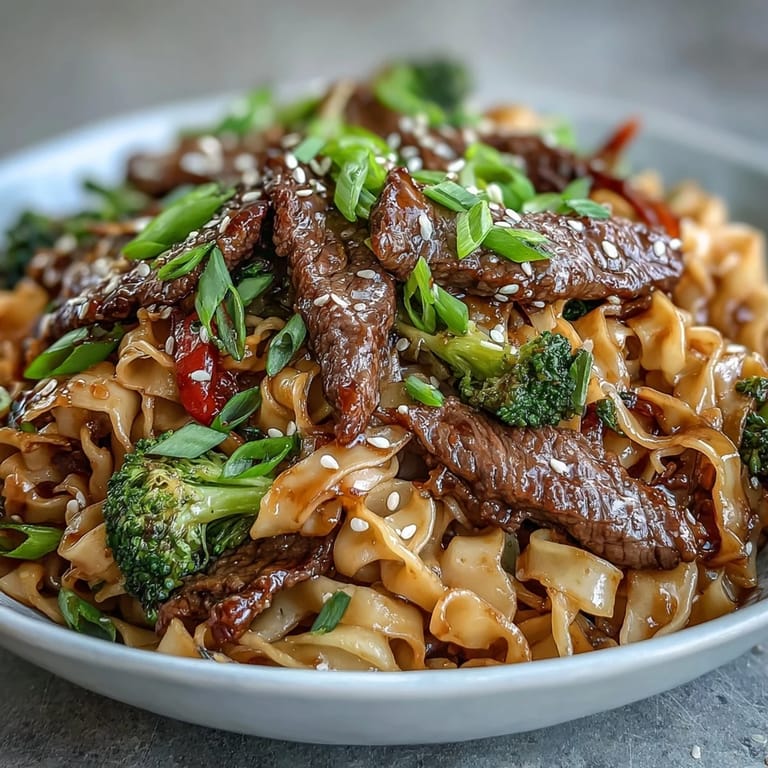
Save This bowl has become my answer to long days and the question of what's for dinner when nothing sounds right. I hope it finds a spot in your rotation, too.
Recipe Questions & Answers
- → What cut of beef works best?
Flank steak sliced thinly against the grain offers ideal tenderness. Sirloin or skirt steak also work well when cut properly.
- → Can I make this spicy?
Add sriracha or gochujang to the sauce for heat. Start with one teaspoon and adjust to your preferred spice level.
- → What other vegetables can I use?
Snap peas, zucchini, mushrooms, or bok choy make excellent additions. Use whatever crisp vegetables you have on hand.
- → How do I store leftovers?
Keep in an airtight container in the refrigerator for up to three days. Reheat gently in a skillet with splash of water.
- → Can I use different protein?
Chicken breast or firm tofu work beautifully as alternatives. Adjust cooking time accordingly—chicken needs slightly longer, tofu less.
- → Why slice against the grain?
Cutting against the muscle fibers shortens them, making each bite more tender. Look for the lines running through the meat and slice perpendicular to them.