 Save
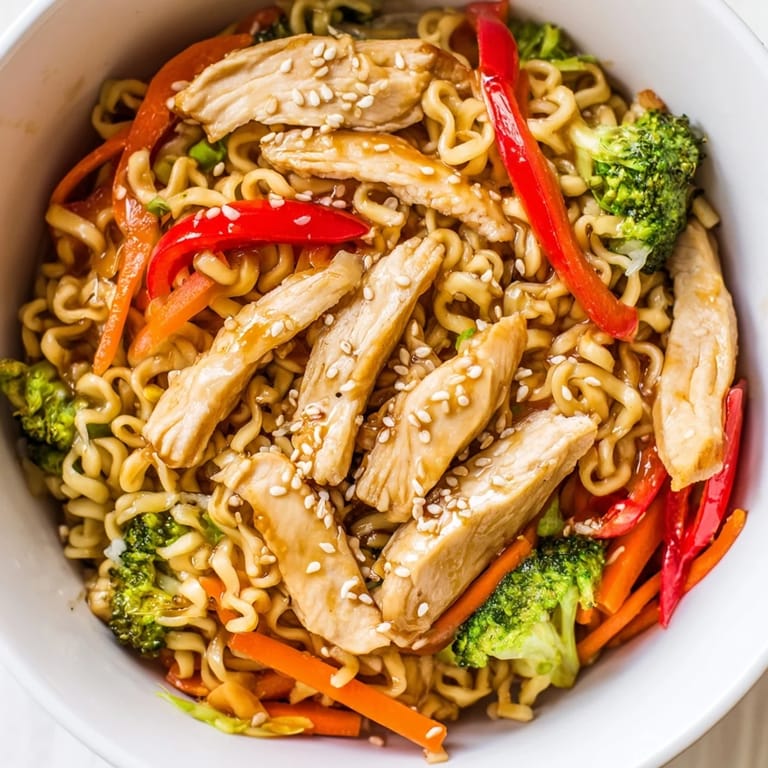
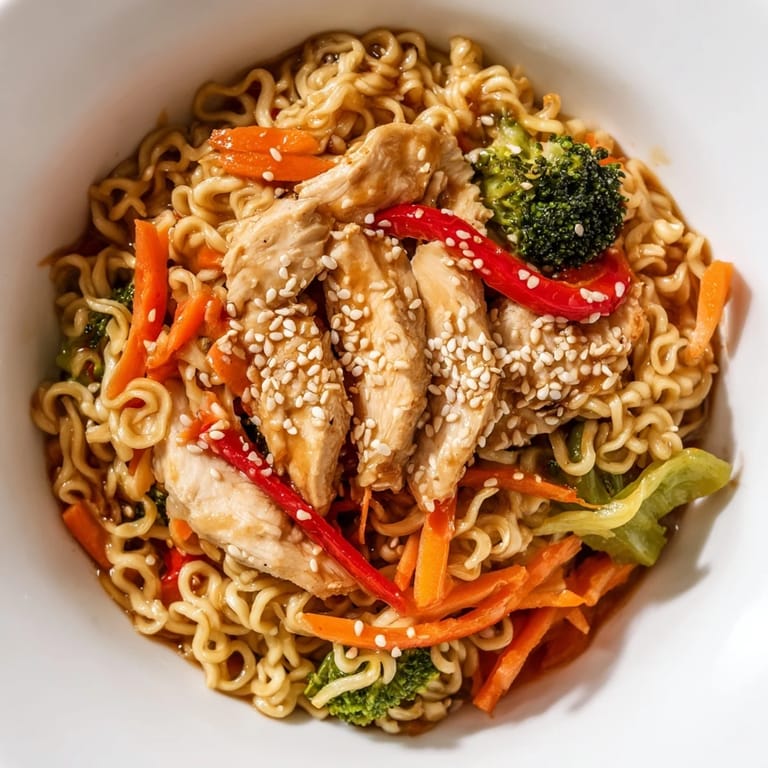
Save My roommate walked in one night while I was dumping instant ramen into a screaming hot wok, and she looked at me like I'd lost my mind. But that's exactly how this dish was born: a craving for something fast, fiery, and filling when the fridge was half-empty and my patience was thinner. I tossed in whatever vegetables I had, some chicken I'd meant to use earlier, and a sauce I mixed mostly by instinct. What came out of that pan wasn't just dinner—it was the kind of meal that makes you stand at the stove and eat straight from the skillet.
I made this for my brother once after he'd had a rough week, and he sat at my tiny kitchen table with his phone face-down—something he never does—just twirling noodles and asking if I could teach him how to make it. That's when I realized this recipe wasn't just about speed or spice. It was about the kind of food that pulls you back into the moment, makes you slow down just enough to taste what's in front of you.
Ingredients
- Boneless, skinless chicken breasts: Slice them thin so they cook fast and soak up the sauce; I learned the hard way that thick chunks just sit there and steam instead of sear.
- Instant ramen noodles: Toss the seasoning packets and treat these like fresh noodles; they crisp up beautifully in the wok and hold onto every drop of sauce.
- Red bell pepper: Adds sweetness and a pop of color that makes the dish look as good as it tastes.
- Broccoli florets: They stay crisp if you don't overcook them, giving you that satisfying crunch in every bite.
- Carrot: Julienne it thin so it cooks evenly and adds a slight earthiness to balance the heat.
- Green onions: Stir them in at the end for a fresh, sharp bite that cuts through the richness.
- Garlic and ginger: These two are non-negotiable; they create the aromatic base that makes your kitchen smell like a street food stall.
- Soy sauce: The salty backbone of the sauce, but don't skip the low-sodium option if you're watching salt intake.
- Sriracha or chili garlic sauce: This is where you control the fire; start with a tablespoon and build from there.
- Oyster sauce: Adds a deep, savory umami that makes the sauce cling to the noodles.
- Sesame oil: A little goes a long way; it brings a toasty, nutty finish that ties everything together.
- Brown sugar: Balances the heat and salt with just a hint of sweetness.
- Toasted sesame seeds: Optional, but they add a subtle crunch and make the dish look finished.
Tired of Takeout? 🥡
Get 10 meals you can make faster than delivery arrives. Seriously.
One email. No spam. Unsubscribe anytime.
Instructions
- Boil the noodles:
- Cook the ramen according to the package, but pull them a minute early so they stay firm. Drain them well and set aside; wet noodles will make your stir-fry soggy.
- Mix the sauce:
- Whisk together soy sauce, sriracha, oyster sauce, sesame oil, brown sugar, and water in a small bowl. This takes two minutes and saves you from scrambling later when the wok is hot.
- Sear the chicken:
- Heat a tablespoon of vegetable oil in a large wok or skillet over medium-high heat, then add the sliced chicken in a single layer. Let it sit for a minute before stirring so it gets a golden edge, then cook until just done, about four to five minutes total, and set it aside.
- Toast the aromatics:
- In the same pan, add the garlic and ginger, stirring constantly for thirty seconds until they smell incredible and just start to brown. Don't let them burn or they'll taste bitter.
- Stir-fry the vegetables:
- Toss in the bell pepper, broccoli, and carrot, and keep everything moving for three to four minutes. You want them tender but still crisp, with a little char on the edges.
- Bring it all together:
- Return the chicken to the pan, add the cooked noodles, and pour the sauce over everything. Toss it all together for two to three minutes, making sure every strand of noodle is coated.
- Finish and serve:
- Stir in the green onions, taste, and adjust the spice or salt if needed. Serve it hot, topped with sesame seeds and fresh herbs if you have them.
 Save
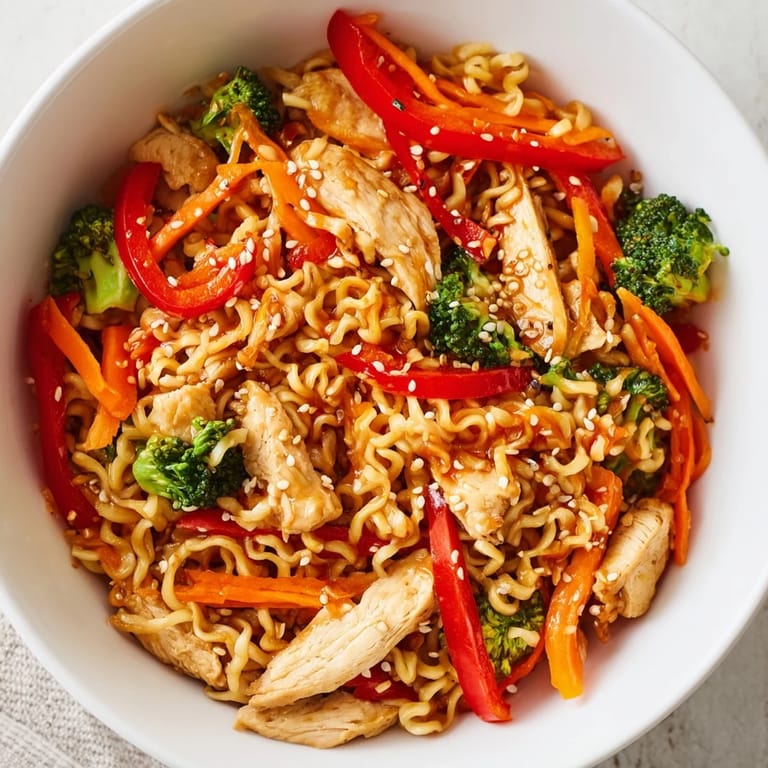
Save One Saturday morning, I woke up to my neighbor knocking on my door, asking what I'd cooked the night before because the smell had drifted into the hallway. I handed her a container of leftovers, and she texted me two hours later asking for the recipe. That's when I realized this dish had a life of its own, the kind that makes people curious and hungry at the same time.
Making It Your Own
This recipe is forgiving in the best way. I've swapped chicken for tofu, shrimp, or even thinly sliced beef, and it's worked every time. If you're vegetarian, press some firm tofu, cube it, and fry it until the edges are crispy before adding it back in with the noodles. You can also throw in snap peas, mushrooms, baby corn, or whatever's wilting in your crisper drawer. The sauce is the constant; everything else is just improvisation.
Storage and Reheating
Leftovers keep in the fridge for up to three days, though the noodles will soak up more sauce as they sit. When you reheat it, add a splash of water or a drizzle of sesame oil to loosen everything up, and toss it in a hot pan instead of the microwave. The microwave turns the noodles gummy, but the stovetop brings back that just-cooked texture. I've even eaten it cold straight from the fridge on a lazy morning, and it still tastes good.
Pairing Suggestions
This dish is rich and bold, so I like to serve it with something light and crisp on the side. A cold lager or a pot of jasmine tea works beautifully, and if you want something crunchy, quick-pickled cucumbers or a simple cabbage slaw will cut through the heat. Sometimes I'll put out a bowl of extra sriracha and let people adjust their own spice level at the table.
- Serve with a side of quick-pickled vegetables for contrast.
- Keep extra sriracha and sesame seeds on the table for customization.
- Pair with iced green tea or a light beer to balance the richness.
 Save
Save This is the kind of recipe that fits into your life instead of demanding you rearrange your schedule for it. Make it on a Tuesday, make it for friends, or make it just for yourself when you need something that tastes like effort but doesn't require any.
Recipe Questions & Answers
- → Can I prepare the sauce in advance?
Yes, whisk together the sauce ingredients up to 24 hours ahead and store in an airtight container in the refrigerator. Simply bring to room temperature or gently warm before stir-frying.
- → How do I make this less spicy?
Reduce or omit the sriracha entirely, or use a milder chili sauce. You can also add a splash of sesame oil or water to dilute the heat while maintaining flavor complexity.
- → What vegetables work best as substitutes?
Snap peas, mushrooms, baby corn, bok choy, and zucchini all stir-fry beautifully. Choose vegetables with similar cooking times and cut them uniformly for even cooking.
- → Is this suitable for meal prep?
The components can be prepped ahead, but assemble and stir-fry fresh for optimal texture. Cooked leftovers keep refrigerated for 2-3 days and can be gently reheated with a splash of water.
- → What protein alternatives work well?
Tofu, shrimp, beef, or pork all work wonderfully. Adjust cooking times accordingly—shrimp needs only 2-3 minutes, while firmer proteins like beef or pork may need 5-7 minutes.
- → Can I use fresh ramen noodles instead of instant?
Absolutely. Fresh ramen noodles require less cooking time and provide a silkier texture. Reduce the water in the sauce slightly, as fresh noodles retain more moisture than instant varieties.