 Save
Save There's a particular smell that fills the kitchen when red peppers hit a hot oven, something almost sweet and smoky that makes you pause whatever you're doing. I discovered this soup on a gray afternoon when I had four beautiful peppers sitting on my counter and absolutely no plan for them. The roasting was accidental brilliance, really, born from the simple desire to coax out every bit of flavor they had to offer. What emerged was this impossibly silky, vibrant thing that tasted like summer distilled into a bowl, and suddenly I understood why roasting peppers changes everything.
I made this for my neighbor on a night when she'd had one of those weeks, the kind where everything feels too heavy. She showed up looking tired, and forty minutes later we were sitting at my kitchen table with these steaming bowls and crusty bread, and she actually smiled, the real kind. That's when I knew this recipe had crossed from just being delicious into something that mattered, because it had somehow turned an ordinary Tuesday into a moment where things felt a little lighter.
Ingredients
- Red bell peppers (4 large): These are the star, and roasting them transforms their natural sweetness into something deep and concentrated, almost caramel-like.
- Yellow onion (1 large, chopped): The foundation layer that adds body and depth without overwhelming the peppers.
- Garlic cloves (4, unpeeled): Roasted whole, the papery skin protects them and they become creamy and mellow rather than sharp and aggressive.
- Carrot and celery (1 each, chopped): These build a subtle sweetness that balances the harissa and paprika beautifully.
- Vegetable broth (3 cups): Use a good quality one if you can, because it becomes the liquid bed your entire soup rests on.
- Olive oil (2 tbsp total): One tablespoon roasts the peppers and garlic, the other sautés your aromatics, so don't skip either dose.
- Harissa paste (1-2 tsp): This is your heat and complexity, but it's gentle here, never bullying the delicate pepper flavor.
- Smoked paprika (1 tsp): The secret that makes people ask what that subtle smoky thing is.
- Ground cumin (1/2 tsp): A whisper of earthiness that ties the whole thing together.
- Salt and black pepper: Always taste and season at the very end when you can truly balance everything.
- Crème fraîche or yogurt (1/4 cup, optional): A cooling dollop that makes the red look even brighter, or skip it entirely if you want to keep things vegan.
- Fresh herbs and crusty bread (optional): The parsley or cilantro adds a final freshness, and bread turns this from soup into dinner.
Tired of Takeout? 🥡
Get 10 meals you can make faster than delivery arrives. Seriously.
One email. No spam. Unsubscribe anytime.
Instructions
- Roast your peppers and garlic:
- Set your oven to 425°F and arrange the whole red peppers and unpeeled garlic cloves on a baking sheet, drizzle them with a tablespoon of olive oil, and let them roast for 25-30 minutes, turning the peppers once halfway through. You'll know they're ready when the skins are blackened and blistered and the peppers have collapsed into themselves slightly, and the garlic cloves are golden and soft when you press them.
- Steam and peel the peppers:
- Transfer the hot peppers to a bowl and cover it tightly, letting them sit for ten minutes so the steam loosens the charred skin. Once they've cooled slightly, the skin peels away surprisingly easily, and you can squeeze the roasted garlic right out of its papery shell.
- Build the base:
- Heat your remaining tablespoon of oil in a large pot over medium heat and add the chopped onion, carrot, and celery, stirring occasionally until everything is soft and fragrant, about five to seven minutes. This foundation holds all the flavor that comes next.
- Add the roasted vegetables and spices:
- Toss in the roasted peppers and garlic along with the smoked paprika, cumin, and harissa paste, stirring until everything is coated and the kitchen fills with that toasty, layered aroma. Cook for just one more minute so the spices bloom and release their essential oils.
- Simmer together:
- Pour in the vegetable broth and bring everything to a gentle boil, then lower the heat and let it simmer for about ten minutes, which gives all those flavors a chance to truly marry and mingle.
- Blend until silk:
- Using an immersion blender, purée the soup directly in the pot until it reaches that silky, velvety texture where no texture remains, or carefully transfer it in batches to a blender if that's what you have. This is the moment where the soup transforms into something almost restaurant-quality.
- Taste and season:
- Give the soup a final taste and adjust the salt and pepper, remembering that a squeeze of harissa near the end can add another layer if you want more heat. Every stove is different, every broth is different, so trust your palate here.
- Serve with love:
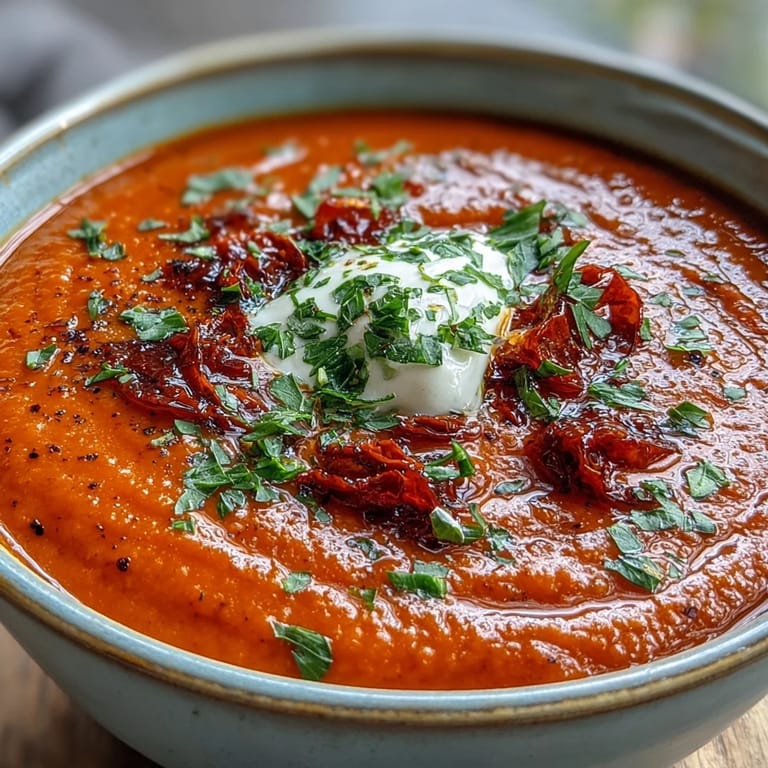
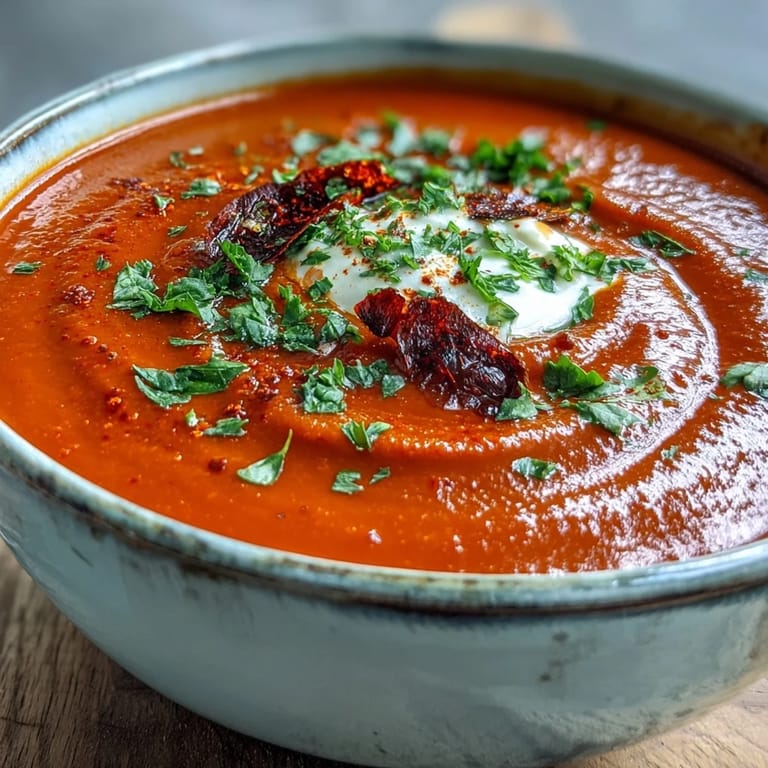
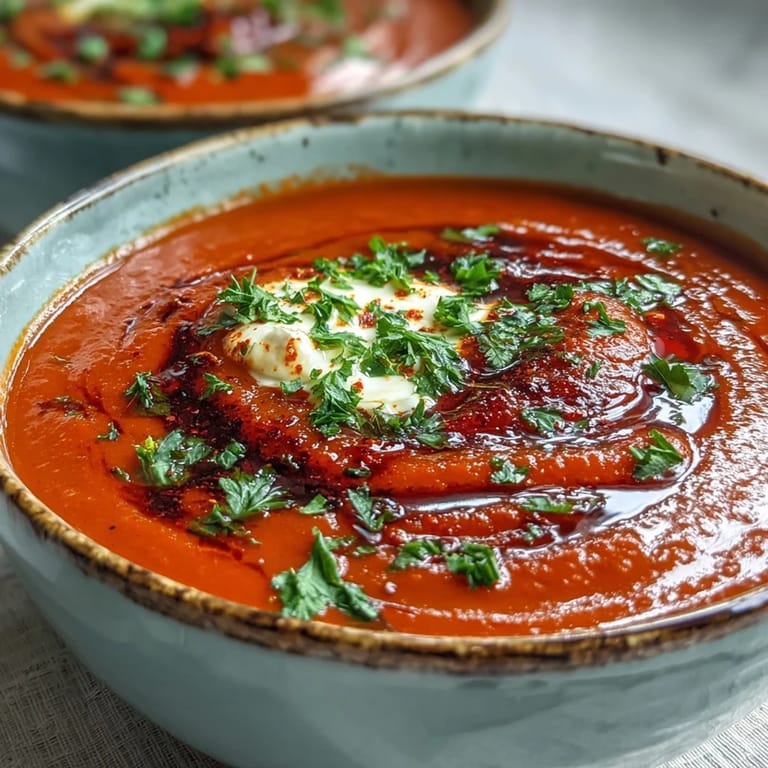
- Ladle the soup into bowls and finish with a small dollop of crème fraîche or yogurt if you like, a scatter of fresh parsley or cilantro, and serve alongside crusty bread for dipping.
 Save
Save What struck me most was realizing this soup has become the thing I make when I want to show someone I care without making a big production out of it. It's humble enough for a Tuesday, but somehow elegant enough that people think you've fussed far more than you actually did.
The Magic of Roasted Garlic
One of the best discoveries I've made in my kitchen is how completely differently roasted garlic behaves compared to raw or sautéed garlic. When you roast it whole and unpeeled, the natural sugars caramelize slowly, turning sharp and pungent into something sweet and almost buttery. In this soup, that mellow roasted garlic is what gives it that luxurious depth that makes people ask if you added cream when you absolutely didn't. It's one of those secrets that feels like kitchen magic once you understand it.
Why Roasting Matters Here
There's something about roasting that concentrates flavor in a way that no other cooking method quite achieves. The direct heat causes the peppers' natural sugars to caramelize, the skins to char and develop complexity, and the vegetables to become more themselves, more intense, more real. I used to make pepper soup by simply sautéing raw peppers, and it was pleasant enough, but it wasn't this, it wasn't silky or layered or memorable. Roasting changed everything for me, and now I roast peppers for almost every soup because the difference is that remarkable.
Customizing Your Bowl
One of the things I love about this recipe is how flexible it is, how you can make it yours without compromising what makes it special. The harissa can be adjusted to your comfort level with heat, the garnishes can be swapped or omitted entirely, and the broth can be changed depending on what you have or what flavor direction you want to go. I've made it with a touch of smoked paprika doubled for extra smokiness, I've added a pinch of chili flakes for people who like real heat, and I've made it completely vegan by using cashew cream instead of crème fraîche. The foundation is solid enough to handle your creativity, and that's when a recipe stops being just instructions and becomes something you own.
- If you want it spicier, start with harissa and build up, tasting as you go so you don't overshoot.
- A swirl of pesto or a drizzle of good olive oil on top adds a completely different dimension if you want to dress it up.
- Leftover soup keeps for three days in the fridge and actually tastes even better the next day as the flavors continue to deepen and meld together.
 Save
Save This soup became a favorite not because it's complicated, but because it proves that simple ingredients treated with care can create something truly special. Make it this week and you'll understand why.
Recipe Questions & Answers
- → Can I use jarred roasted peppers instead of fresh?
Yes, jarred roasted peppers work well. Look for ones packed in water, not oil. Drain thoroughly and skip the roasting step. Add them directly when combining with the aromatics.
- → How can I make this soup creamier without dairy?
Blend in a quarter cup of soaked cashews or coconut cream with the soup. Alternatively, add a cooked potato during simmering for natural creaminess when pureed.
- → What can I substitute for harissa paste?
Mix equal parts tomato paste with smoked paprika and a pinch of cayenne. Alternatively, use Calabrian chili paste, sriracha, or Aleppo pepper flakes to taste.
- → How long does this soup keep in the refrigerator?
Store in an airtight container for up to 3 days. The flavors often improve overnight. Reheat gently over medium-low heat, adding a splash of broth if needed to adjust consistency.
- → Can I freeze this roasted pepper soup?
Absolutely. Cool completely before transferring to freezer-safe containers. Leave some headspace as liquids expand when frozen. Thaw overnight in the refrigerator and reheat slowly.
- → What's the best way to achieve the silkiest texture?
Use a high-powered blender in batches, running longer than you think necessary. Strain through a fine-mesh sieve for ultra-smooth results. An immersion blender works well too.