 Save
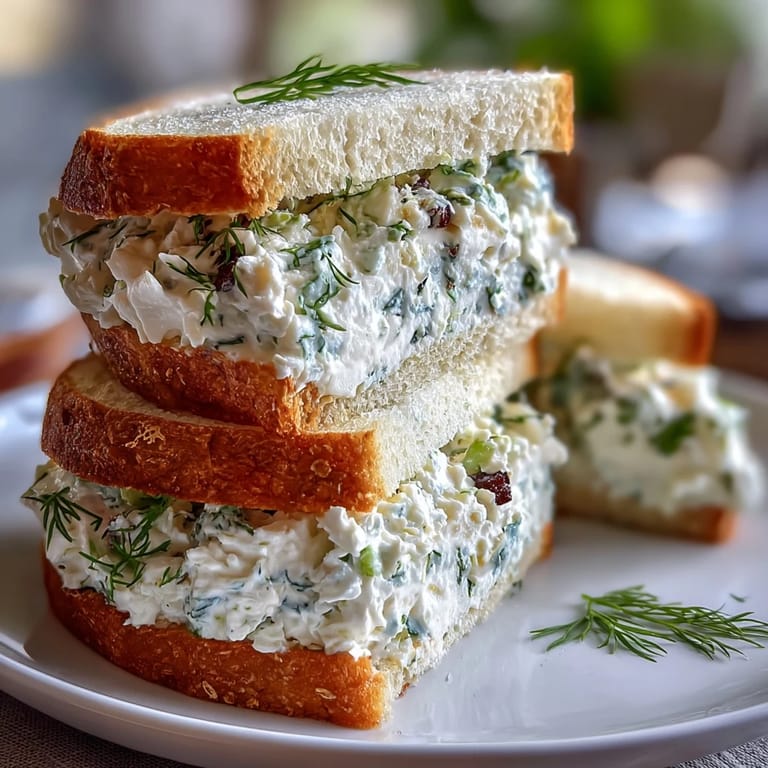
Save My grandmother kept a leather-bound guest book on her dining room sideboard, and every Derby Day, someone would write about these sandwiches before anything else. The pale green spread tucked between thin white bread seemed almost too delicate to eat, yet everyone reached for seconds. Years later, I realized she'd been making them exactly the same way since the 1970s—not out of stubbornness, but because some things simply don't need fixing.
I made these for my first book club meeting as the host, nervous and slightly underprepared. Someone took a bite and closed their eyes like they'd just tasted their childhood. That's when I understood these aren't just sandwiches—they're the edible equivalent of Southern hospitality, the kind that makes people feel genuinely welcomed.
Ingredients
- 1 large English cucumber, peeled and seeded: English cucumbers have fewer seeds and thinner skin, so they blend seamlessly into the spread without turning it watery or bitter.
- 8 oz cream cheese, softened: Soft cream cheese incorporates smoothly without lumps; let it sit on the counter for 30 minutes before mixing.
- 2 tablespoons mayonnaise: This adds richness and helps the spread hold together without being heavy or greasy.
- 2 tablespoons finely chopped fresh dill: Fresh dill is non-negotiable here; dried dill tastes dusty and ruins the delicate flavor profile.
- 1 tablespoon finely chopped chives: Chives provide a whisper of onion flavor without the sharpness that overpowers the cucumber.
- 1 tablespoon grated onion: Grate it fresh right into the bowl so it releases its juice and flavor; grated onion from a jar won't work the same way.
- 1/4 teaspoon salt and 1/8 teaspoon ground white pepper: White pepper keeps the spread looking pale and refined instead of speckled.
- 2–3 drops green food coloring (optional): Traditional Benedictine is tinted pale green; skip it if you prefer, but it does add to the visual charm.
- 12 slices very fresh white sandwich bread, crusts removed: Bread that's a day or two old will crumble when you trim it; buy it the morning you plan to make these.
- 2 tablespoons unsalted butter, softened (optional): A thin butter layer acts as a moisture barrier so the bread doesn't get soggy.
Tired of Takeout? 🥡
Get 10 meals you can make faster than delivery arrives. Seriously.
One email. No spam. Unsubscribe anytime.
Instructions
- Squeeze the cucumber dry:
- Grate the peeled and seeded cucumber on a fine grater, then wrap it in a clean kitchen towel and squeeze hard—really hard—over the sink. Water is the enemy here; any moisture left behind will make your spread runny and thin.
- Build the creamy base:
- In a medium bowl, combine the softened cream cheese, mayonnaise, dill, chives, grated onion, salt, and white pepper. Stir until the mixture is completely smooth with no cream cheese streaks visible.
- Add the cucumber and color:
- Fold the drained cucumber into the cream cheese mixture until evenly distributed. If using food coloring, add it drop by drop while stirring until the spread reaches that soft pale-green shade.
- Prepare the bread:
- Trim the crusts from all the bread slices using a sharp serrated knife, then lightly butter one side of each slice if you want extra insurance against sogginess. This step matters more than you'd think on warm afternoons.
- Spread and stack:
- Lay out half the bread slices and spread a generous layer of the Benedictine mixture on each one. Top with the remaining bread slices, butter-side down if buttered, and gently press to help them stick together.
- Cut and serve:
- Using a sharp knife, cut each sandwich into four pieces—rectangles or triangles, whichever feels right. Arrange them on a platter immediately, or cover loosely with a damp paper towel and plastic wrap and refrigerate until party time.
 Save
Save At a Derby party last May, a woman in a cream-colored hat told me these sandwiches reminded her of her mother's kitchen. She got a little teary, and I handed her a second one without asking. That's the power of something this simple and done this well—it reaches back and touches people in ways you can't predict.
The Green Food Coloring Question
The pale green tint is traditional and visually lovely, but it's entirely optional. Some people skip it for a cleaner, more modern look. If you do use coloring, add it very gradually—two or three drops mixed in can look like an entire bottle when you're not paying attention. The goal is a soft celery-like shade, not a neon green sandwich that screams food coloring. Start conservative; you can always add more, but you can't take it out.
Make-Ahead Strategy
The Benedictine spread actually improves overnight in the refrigerator, letting the flavors mingle and mellow slightly. You can make it up to 24 hours in advance and store it in an airtight container. Assemble the sandwiches no more than 2 to 3 hours before serving, then cover them with a damp paper towel and plastic wrap. They'll stay fresh and tender this way, rather than drying out on an open platter.
Serving and Variations
These sandwiches shine on their own, but you can add thin cucumber slices on top before placing the second slice of bread, or garnish the finished sandwich quarters with tiny fresh dill sprigs. For a different flavor, try whole wheat or rye bread—rye in particular pairs beautifully with the cucumber and dill. They're perfect alongside iced tea, champagne, or a proper Mint Julep, and they'll disappear from the platter faster than you'd expect.
- Layer paper-thin cucumber slices inside the sandwich if you want extra crunch and visual appeal.
- Make a double batch and freeze the wrapped sandwiches; they thaw beautifully for unexpected guests.
- Experiment with herb variations like tarragon or parsley if dill doesn't call to you, but keep the cucumber as the star.
 Save
Save These sandwiches taste like elegance but feel like home, which is exactly what Southern food does best. Make them for your next gathering and watch people's faces light up.
Recipe Questions & Answers
- → How do you prevent sandwiches from becoming soggy?
Lightly buttering the bread slices before spreading the cucumber mixture creates a moisture barrier that helps prevent sogginess.
- → Can other breads be used besides white sandwich bread?
Yes, whole wheat or rye breads can add more flavor and texture while complementing the fresh spread.
- → How do you remove excess moisture from the cucumber?
Grate the cucumber and squeeze it inside a clean kitchen towel or fine mesh strainer to extract as much liquid as possible.
- → Is it possible to prepare the spread in advance?
Yes, the cream cheese and cucumber mixture can be made a day before and refrigerated to meld flavors.
- → What herbs enhance the flavor of this spread?
Fresh dill and chives provide a bright, aromatic note that balances the creaminess and cucumber freshness.
- → Why is green food coloring sometimes added?
Green food coloring enhances the traditional color, giving a vibrant, classic appearance often seen in Kentucky Derby gatherings.